
 Save
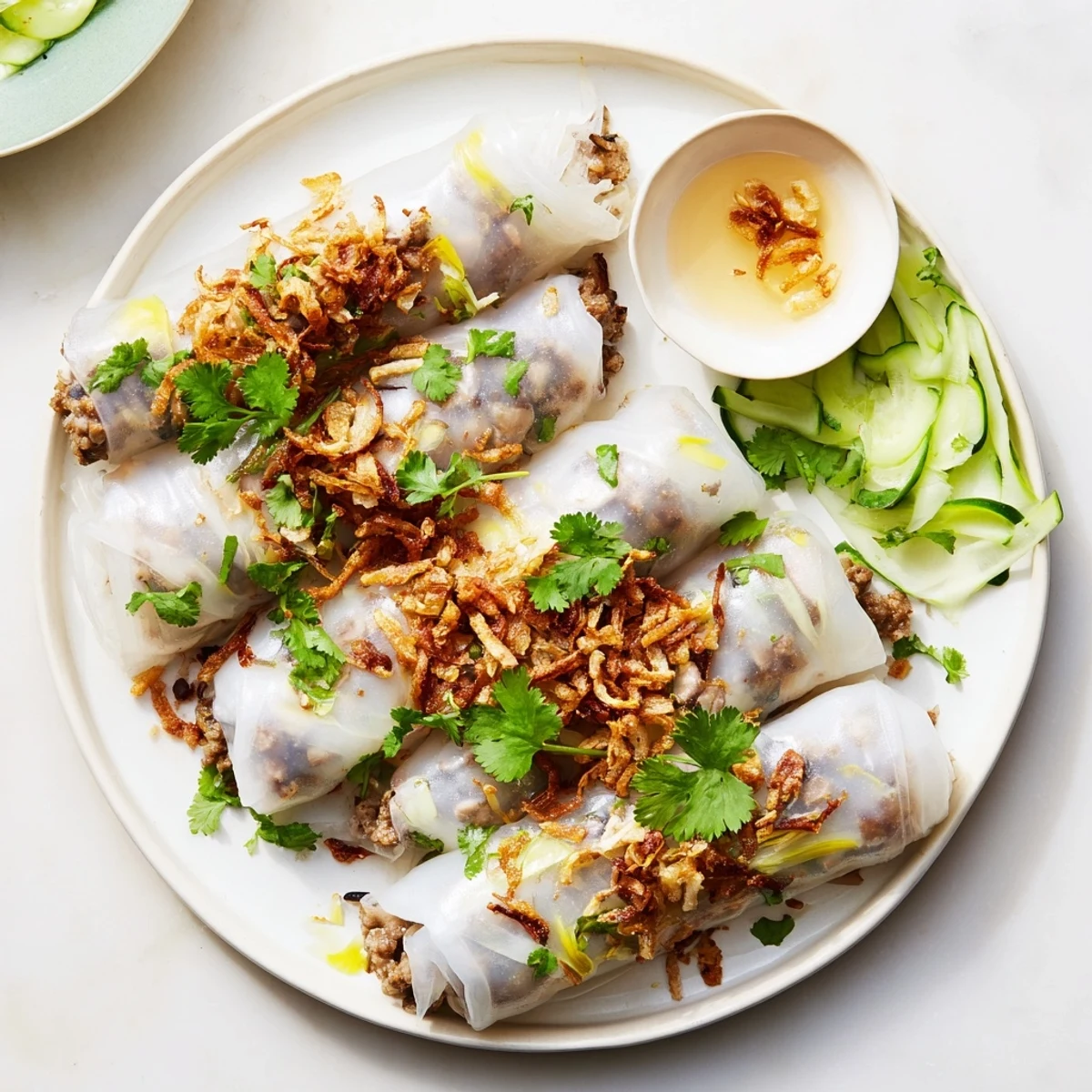
Save Create delicate, translucent rice sheets steamed to perfection and filled with a savory mixture of ground pork, wood ear mushrooms, and aromatics. This beloved Vietnamese dish features silky texture from the rice batter, which gets its signature consistency from tapioca and cornstarch. The filling delivers umami-rich depth through fish sauce and earthy mushrooms, while fresh cilantro, bean sprouts, and fried shallots provide vibrant contrast. Essential to the experience is nuoc cham—a bright, tangy dipping sauce balancing sweet, sour, and savory notes that elevates each bite. Perfect for weekend breakfast or light dinner, these rolls showcase the artistry of Vietnamese steaming techniques.
Standing at my grandmother's kitchen counter at dawn, I watched her hands move like poetry as she poured thin circles of rice batter onto a steaming cloth. The kitchen filled with the scent of warming shallots and pork, and I knew something special was being created. That morning stayed with me for years, pushing me to recreate those delicate, translucent rolls in my own tiny apartment kitchen.
Last Lunar New Year, I attempted to make these for my family and messed up every single roll in the first batch. My kitchen was a disaster zone with torn rice sheets everywhere. But by the time everyone arrived, we'd found our rhythm, sitting around the table eating slightly imperfect rolls together, and that chaotic, delicious meal became the highlight of the holiday.
Ingredients
- Rice flour: Use a fine, white rice flour for the silkiest texture, coarse varieties will make the batter gritty
- Tapioca starch: This is what gives the rolls their signature stretch and delicate translucency
- Ground pork: Fatty pork works best here, keeping the filling moist and flavorful
- Wood ear mushrooms: Their crisp texture and earthy flavor provide perfect contrast to the soft rice wrapper
- Fish sauce: Good quality fish sauce makes all the difference in both filling and sauce
- Fried shallots: These add an essential crunch and deep, savory sweetness to the final dish
Instructions
- Mixing the silky batter:
- Whisk together the rice flour, tapioca starch, cornstarch, salt, water, and vegetable oil until completely smooth. The batter should be thin and pourable, similar to crepe batter. Let it rest for 20 minutes so the starches fully hydrate.
- Cooking the aromatic filling:
- Heat oil in a skillet over medium heat and sauté the onions and garlic until fragrant and translucent. Add the ground pork, breaking it up and cooking until browned. Stir in the chopped wood ear mushrooms, fish sauce, and black pepper. Cook for 2-3 minutes until everything is well combined and fragrant.
- Whisking together the sauce:
- Mix fish sauce, lime juice, sugar, and warm water until the sugar completely dissolves. Add minced garlic and sliced chili, then taste and adjust the balance of sweet, salty, and sour to your liking.
- Steaming the rice sheets:
- Bring water to boil in your steamer or wide pan with an oiled cloth or silicone tray. Ladle a thin layer of batter onto the surface, swirling quickly to create an even circle. Cover and steam for 1-2 minutes until set and slightly translucent.
- Rolling with care:
- Use a thin spatula to gently lift the cooked sheet onto an oiled plate. Place a small line of filling along one edge and roll it up tightly. Repeat with the remaining batter and filling, stacking finished rolls as you go.
- Gathering around the table:
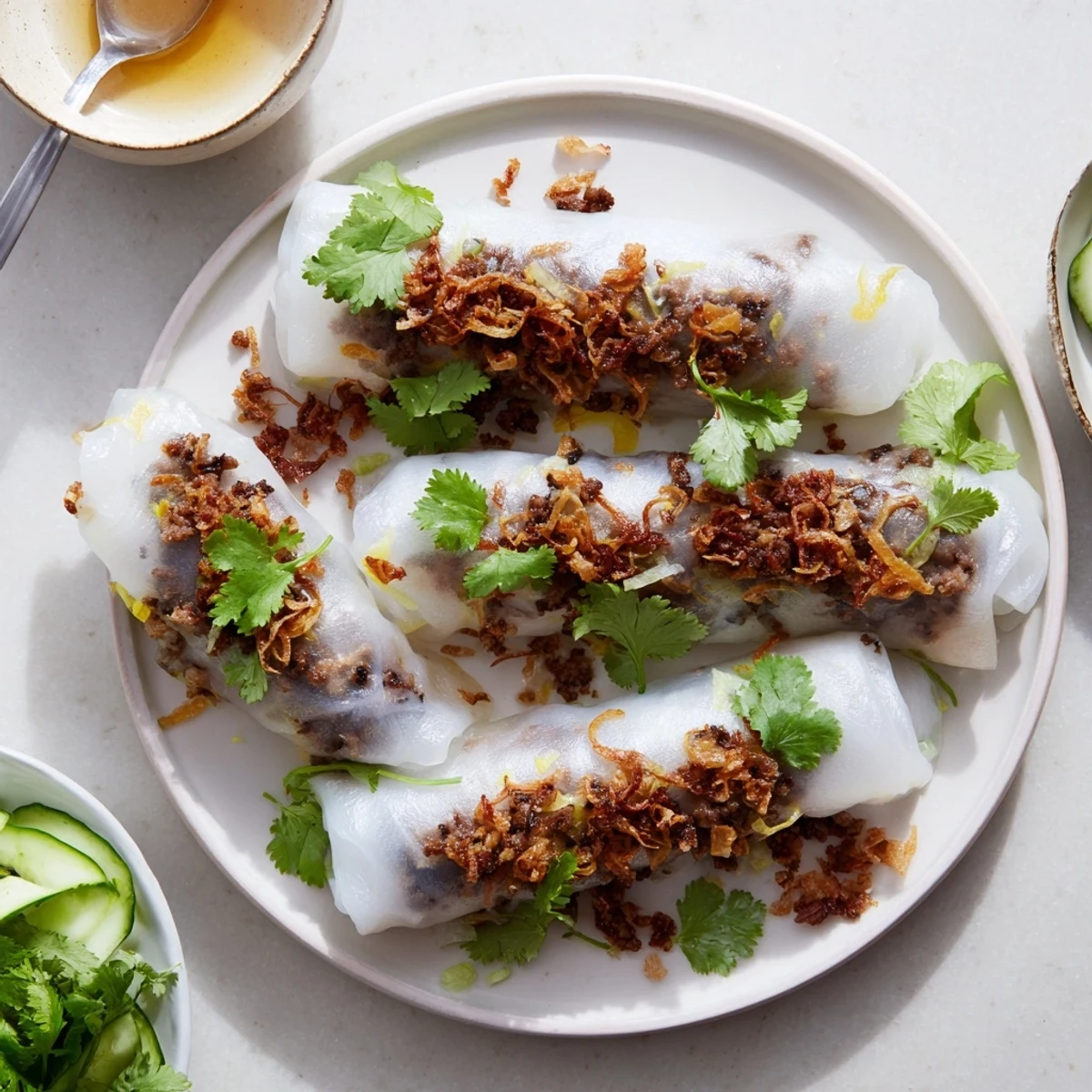
- Arrange the rolls on a platter and generously top with fried shallots, fresh cilantro, crisp bean sprouts, and cucumber slices. Add slices of Vietnamese pork sausage if you like. Serve immediately with the nuoc cham dipping sauce on the side.
 Save
Save My friend Linh once told me that in Hanoi, street vendors make these so fast their hands blur, each roll identical to the last. I'm definitely not that fast, but there's something meditative about finding your rhythm with the steamer and watching each delicate sheet form.
Getting The Right Batter Texture
The batter should be thin enough to swirl easily but thick enough to coat your spoon. I've found that letting it rest is nonnegotiable, those twenty minutes make the difference between patches and perfectly smooth sheets. If you're unsure, do a test roll first.
Mastering The Steaming Setup
A traditional setup uses fabric stretched over a pot, but I've had great success with a nonstick pan and lid. The key is getting your surface lightly oiled and hot enough that the batter sets almost immediately. Practice your swirling motion with an empty pan first.
Serving Suggestions
Banh cuon is best eaten immediately while still warm and the texture is at its peak. Set up a garnish station and let everyone build their own perfect bite.
- Keep extra warm water handy to thin the sauce if it gets too concentrated
- The rolls will stick together, so oil your plate between layers
- Any leftovers can be briefly steamed to refresh, though they're never quite as perfect as fresh
 Save
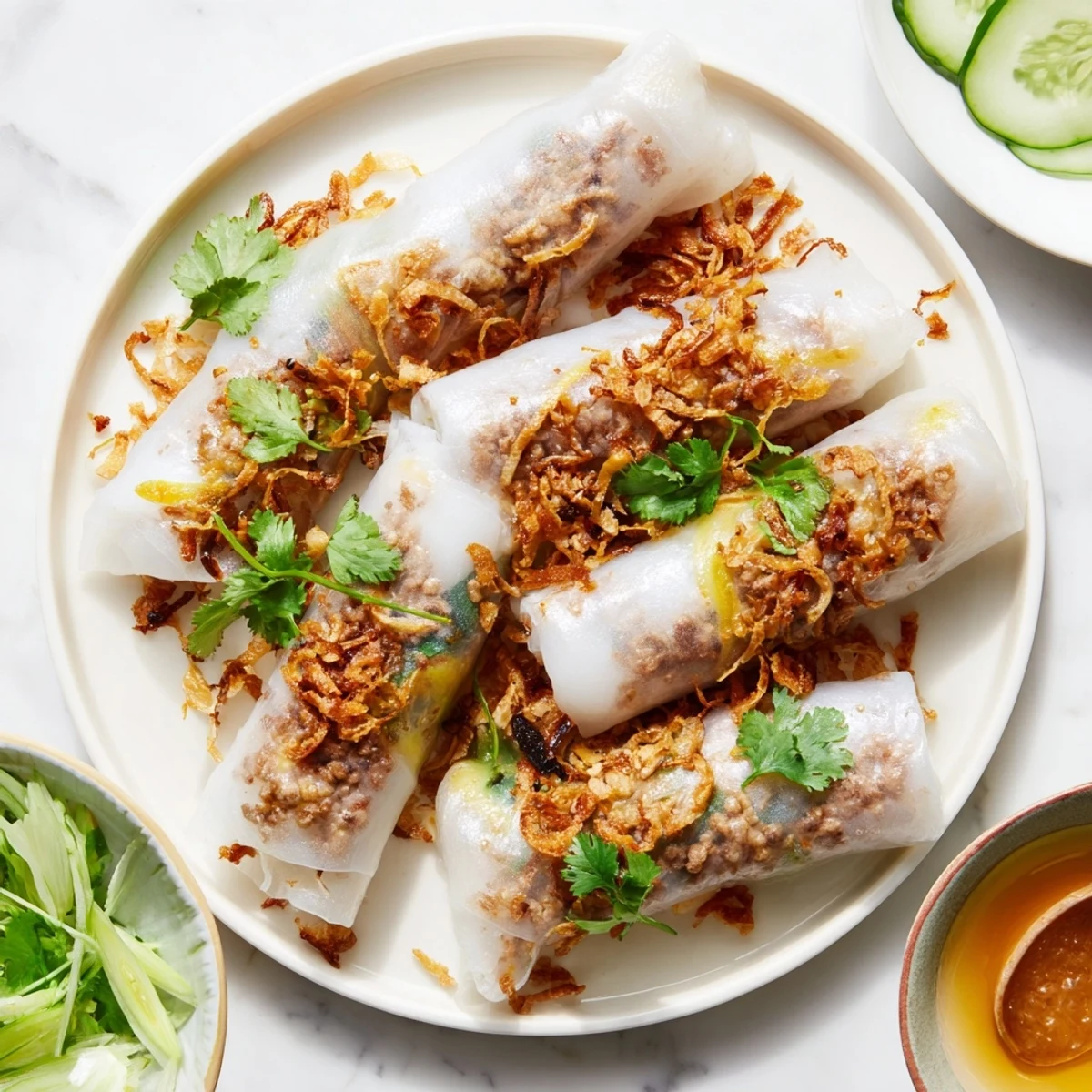
Save Whether it's a weekend breakfast or a casual dinner, these rolls bring people together in the most wonderful way. There's something special about food that requires a little patience and care to create.
Your Recipe Questions Answered
- → What makes Banh Cuon different from other rice rolls?
-
Banh Cuon features exceptionally thin, delicate rice sheets steamed until translucent and silky. Unlike spring rolls with thicker wrappers, these sheets are made fresh, immediately filled while warm, and prized for their melt-in-your-mouth texture that requires precise batter consistency and steaming technique.
- → Can I make Banh Cuon without a traditional steamer?
-
Yes, a nonstick pan with a tight-fitting lid works effectively. The key is maintaining low to medium heat, lightly oiling the surface, and covering quickly to steam the thin batter layer. Some home cooks also use a flat skillet topped with a lightly oiled cheesecloth stretched over the surface.
- → Why is my batter not forming smooth sheets?
-
Batter consistency should resemble thin crepe batter—easily pourable but not watery. Too thick and sheets become gummy; too thin and they tear easily. Letting the batter rest for 20-30 minutes allows starches to hydrate fully, resulting in smoother, more pliable sheets that roll without cracking.
- → What can I substitute for wood ear mushrooms?
-
Shiitake mushrooms provide similar texture and earthy flavor, though wood ear's signature crunch is unique. Dried shiitake must be soaked like wood ear mushrooms. Fresh button mushrooms work but release more moisture during cooking, requiring additional cooking time to evaporate excess liquid.
- → How do I store and reheat leftover Banh Cuon?
-
Best enjoyed immediately for optimal texture. If storing, refrigerate assembled rolls in an airtight container up to 2 days, though sheets may become slightly sticky. Reheat gently by steaming 1-2 minutes or microwaving briefly covered. Store dipping sauce separately and add fresh garnishes before serving.
- → Is Banh Cuon naturally gluten-free?
-
The traditional rice batter using rice flour, tapioca starch, and cornstarch is gluten-free. However, fish sauce brands vary—some contain wheat-based additives. Additionally, processed pork sausage (cha lua) may include wheat fillers. Choose certified gluten-free fish sauce and either omit sausage or verify ingredients for strict gluten-free diets.