
 Save
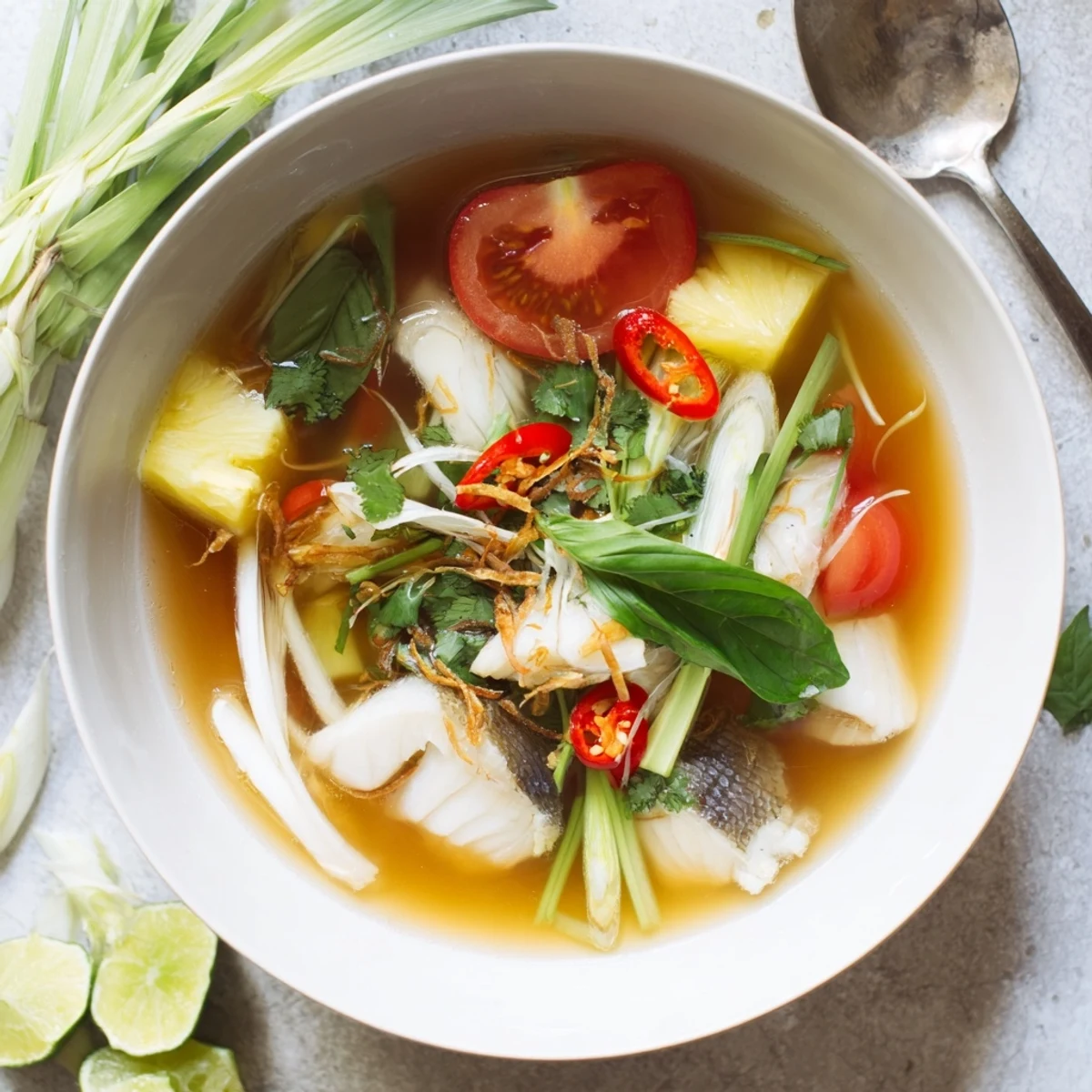
Save This modern interpretation of Canh Chua brings together the classic Vietnamese flavors of sweet, sour, and salty in one harmonious bowl. Fresh white fish simmers gently in a tamarind-based broth alongside juicy pineapple and tomatoes, creating a soup that's both refreshing and satisfying.
The preparation comes together in just 40 minutes, making it perfect for weeknight dinners. The key lies in achieving the right balance of tanginess from tamarind, sweetness from pineapple and sugar, and depth from fish sauce.
Finish each bowl generously with fresh Thai basil, coriander, and scallions for that authentic aromatic touch. Serve alongside steamed jasmine rice or rice vermicelli for a complete meal.
The first time I had canh chua was at my friend Lan's house in Saigon, her grandmother ladling steaming bowls into the humid afternoon air. The tamarind hit my tongue first, bright and startling, then pineapple sweetness rushed in before that familiar fish sauce warmth settled everything down. I've been chasing that perfect sour-sweet balance ever since, tweaking and testing until this version became the one my family actually requests.
Last winter, when everyone was fighting off colds and craving comfort food, this soup became our weekly ritual. My usually picky seven year old asked for thirds, and I realized the bright flavors work even on dreary gray days when you need something to wake up your palate.
Ingredients
- White fish fillets: Catfish holds up beautifully but any mild white fish works, just cut into pieces that fit comfortably on your spoon
- Tamarind paste: This is the soul of the soup, add it gradually and taste as you go, some brands pack more punch than others
- Fresh pineapple: Canned works in a pinch but fresh adds that crisp sweetness that balances the sour perfectly
- Bean sprouts: Add them at the very end so they stay snappy and fresh, never mushy
- Fish sauce: Dont be tempted to reduce this, it provides the essential savory foundation that ties everything together
- Thai basil: Regular basil isnt the same, hunt down the authentic variety at an Asian market
Instructions
- Build the aromatic base:
- Warm a splash of oil in your pot over medium heat, then add minced garlic and sliced shallots, letting them soften until they're fragrant and just beginning to color, about 2 minutes.
- Create the sour broth:
- Pour in your water or fish stock, then stir in the tamarind paste, sugar, salt, and fish sauce until everything dissolves into a reddish brown liquid.
- Simmer the vegetables:
- Add tomato wedges, pineapple pieces, sliced okra, and celery, letting everything cook for about 5 minutes until the vegetables are just starting to tenderize.
- Cook the fish gently:
- Lower the heat slightly and slip in the fish pieces, cooking for just 3 to 4 minutes until the flesh turns opaque and flakes easily.
- Balance the flavors:
- Taste your broth now, adjusting with more fish sauce for saltiness, additional sugar if it's too sharp, or extra tamarind if you want more tang.
- Add the finishing touches:
- Stir in the bean sprouts and sliced chili, simmering for just 1 minute longer, then remove from heat immediately.
- Garnish and serve:
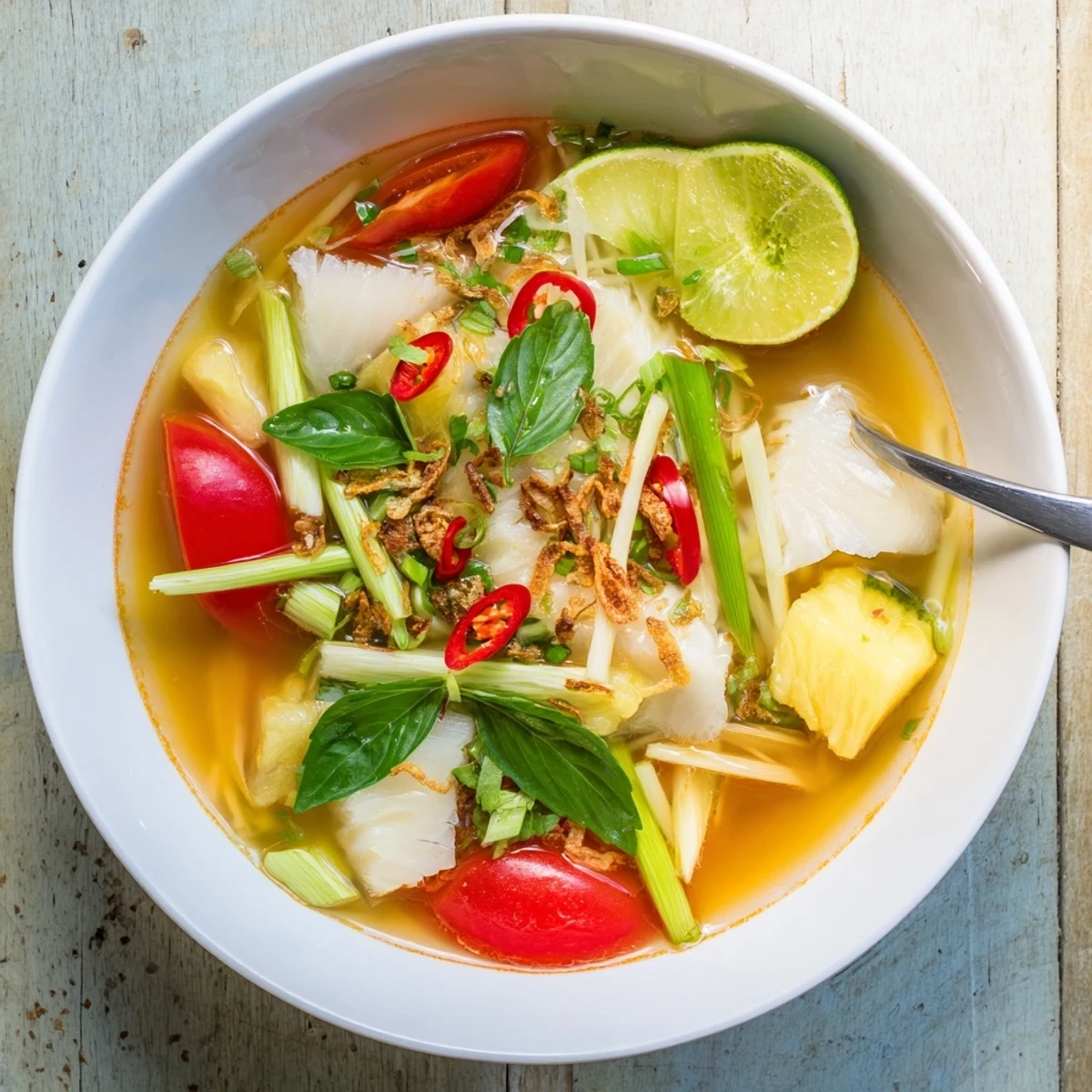
- Ladle the hot soup into bowls and scatter generously with Thai basil, coriander, scallions, and fried shallots, with lime wedges on the side.
 Save
Save This soup has become my go to when friends visit because it looks impressive but comes together so quickly. Everyone assumes it took all day, and I never correct them.
Making It Your Own
Swap in firm tofu for a vegetarian version, using vegetable stock instead of fish based. The texture difference is minimal and the broth still delivers that craveable sweet sour punch that makes this soup so addictive.
Getting The Balance Right
Vietnamese cooking is all about yin and yang, the interplay between opposing elements. In this soup, the tamarind's sourness needs sugar's sweetness, while fish sauce grounds both with its deep umami richness.
Serving Suggestions
A steaming bowl of jasmine rice on the side turns this from appetizer to complete meal. The rice soaks up that precious broth, which might be the best part of the entire dish.
- Prepare all ingredients before you start cooking once the fish goes in, everything moves fast
- Keep your lime wedges at room temperature so they release more juice when squeezed
- Fried shallots from Asian markets are worth the special trip, they add crunch and depth
 Save
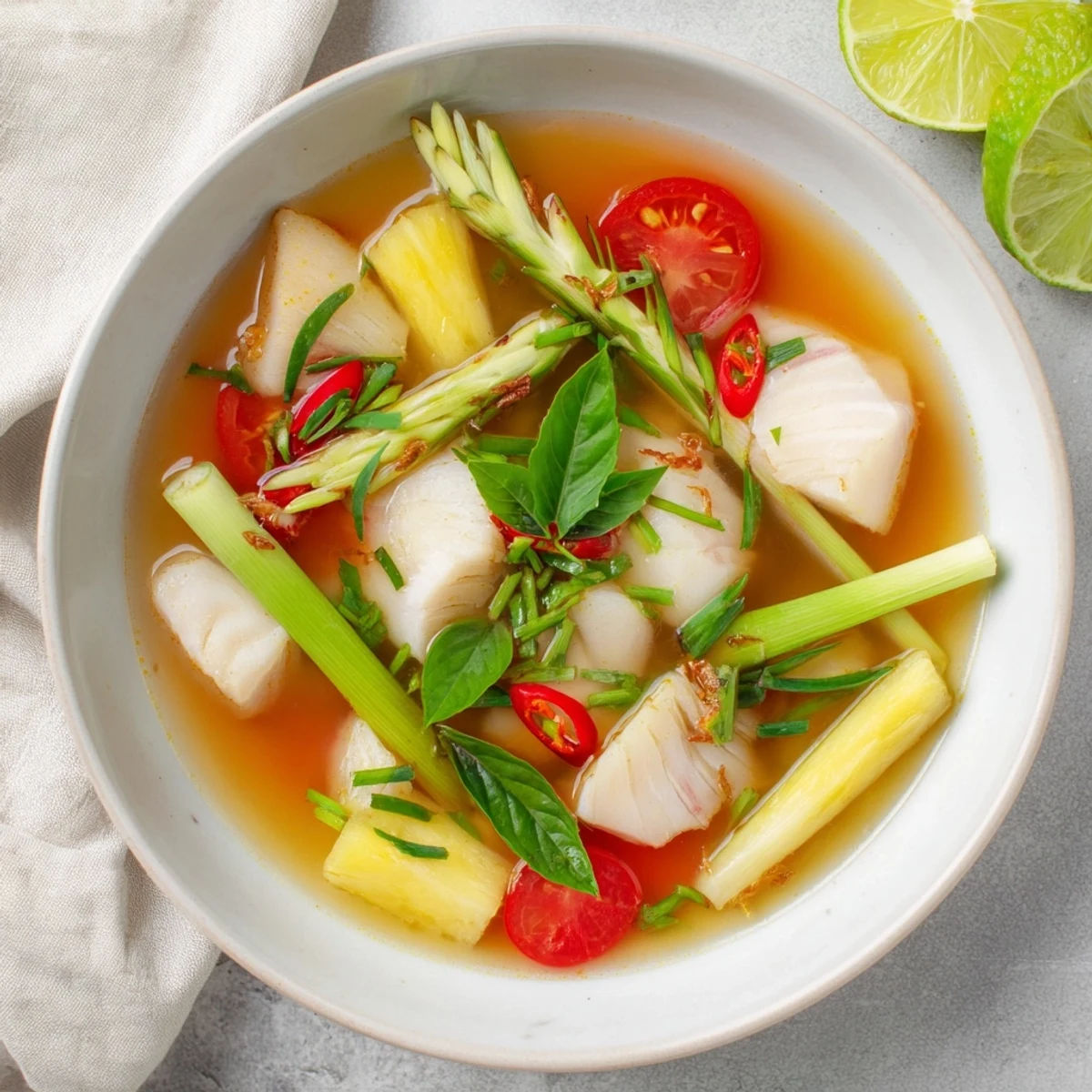
Save There's something deeply comforting about a soup that wakes up your senses while soothing your soul at the same time.
Your Recipe Questions Answered
- → What makes Canh Chua sour?
-
The signature sourness comes from tamarind paste, which provides a natural, fruity acidity. You can adjust the amount to achieve your preferred level of tanginess.
- → Can I use other types of fish?
-
Absolutely. While catfish is traditional, any firm white fish like tilapia, bass, snapper, or even cod works well. Just ensure the pieces are evenly sized for even cooking.
- → Is this soup spicy?
-
The base soup is not inherently spicy. Heat comes from optional sliced red chilies. You can adjust the spice level to your preference or omit chilies entirely for a milder version.
- → Can I make this vegetarian?
-
Yes. Substitute the fish with firm tofu cubes and use vegetable or mushroom stock instead of fish stock. Replace fish sauce with soy sauce or a vegetarian fish sauce alternative.
- → How do I store leftovers?
-
Store in an airtight container in the refrigerator for up to 2 days. Reheat gently over low heat, being careful not to overcook the fish. The broth may develop even more flavor overnight.
- → What should I serve with Canh Chua?
-
Steamed jasmine rice is the traditional accompaniment, but rice vermicelli works beautifully as well. The soup also pairs well with crispy spring rolls or fresh Vietnamese summer rolls.