
 Save
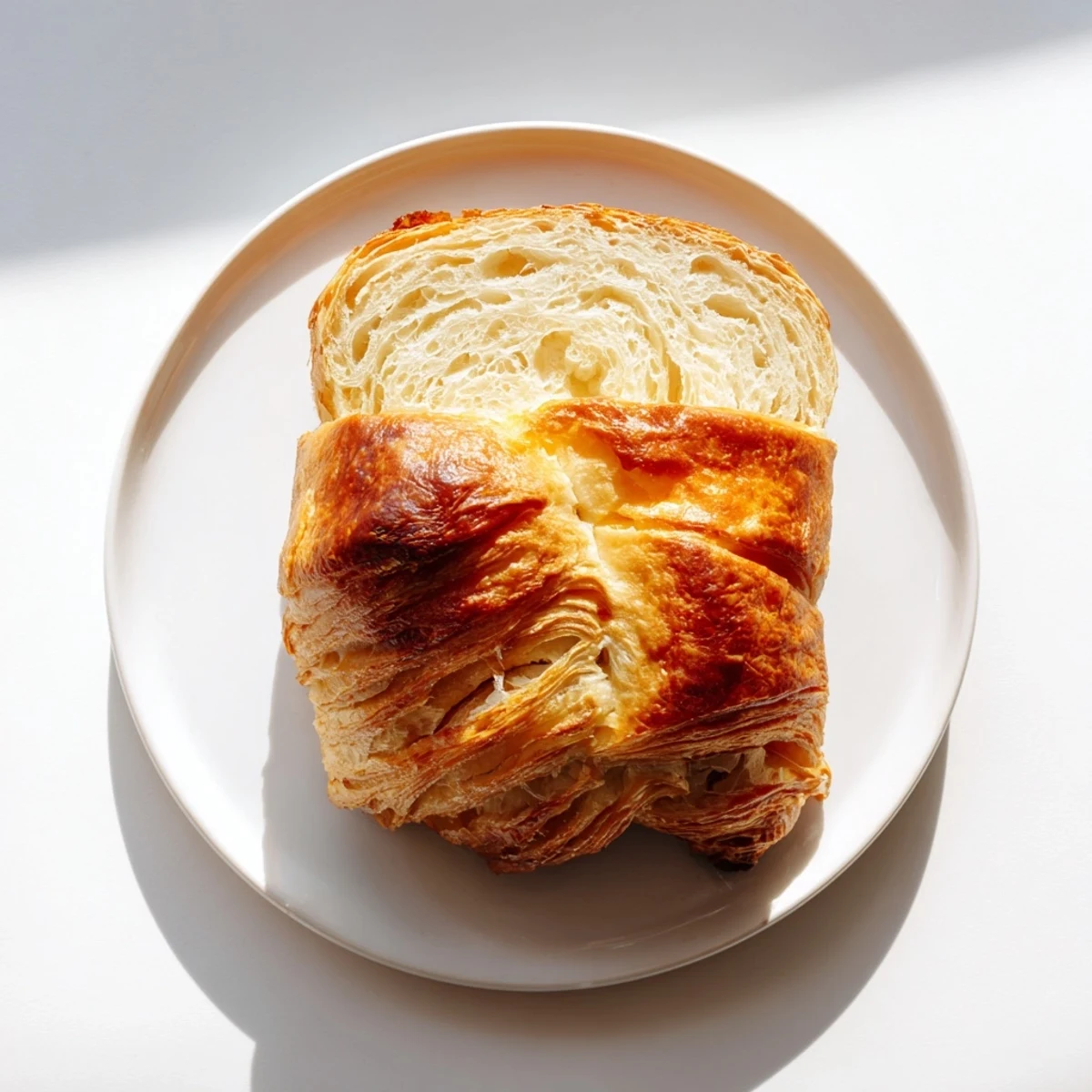
Save Create bakery-worthy laminated dough at home with this buttery French-style loaf. The process involves rolling and folding cold butter layers into enriched dough, creating those signature flaky pockets that make croissants irresistible. Though requiring patience through multiple chilling periods, the result delivers tender, golden layers perfect for toasting and serving with honey or jam.
My tiny apartment kitchen was barely big enough to turn around in, but I'd decided that morning that croissant bread was happening. The butter sat out on the counter in happy little slices while rain drummed against the window, making the whole building smell like yeast and anticipation. Four hours later, when I pulled that golden loaf from the oven, steam curling off the crust in the most dramatic way, I knew I'd started something dangerous.
My sister stayed over that weekend and watched me through all the rolling and folding and chilled butter panic. We kept running to the refrigerator together like co-conspirators checking on something precious. When she took that first bite, eyes closed and butter practically dripping down her chin, she asked if I loved her enough to make this for her wedding breakfast.
Ingredients
- All purpose flour: The backbone of your dough structure, bread flour works too butAP gives a wonderfully tender crumb
- Instant yeast: Fast acting and forgiving, no proofing needed which keeps the process moving smoothly
- Unsalted butter: You will need cold butter for the lamination process, keep it firm and work quickly
- Whole milk: Lukewarm activates your yeast without killing it, body temperature is perfect
- Eggs: One for richness in the dough, another whisked with milk for that gorgeous golden shine
- Sugar and salt: Sugar feeds the yeast and adds subtle sweetness, salt balances all that butter
Instructions
- Mix your dough:
- Combine flour, sugar, salt, and yeast in your large bowl keeping yeast opposite the salt, then add warm milk, melted butter, and egg until a sticky shaggy dough forms
- Knead until smooth:
- Work the dough for seven to ten minutes until it feels elastic and smooth, then let it rise in a greased bowl until doubled, about one hour
- Chill out:
- Punch down the dough, shape into a rectangle, wrap and refrigerate for thirty minutes to firm up before lamination
- First fold:
- Roll dough into a twelve by sixteen inch rectangle, arrange cold butter slices over two thirds, fold the bare third over butter, then fold remaining third on top like a letter
- Rotate and repeat:
- Spin the dough ninety degrees so openings face you, roll again to twelve by sixteen, fold into thirds, wrap and chill thirty more minutes
- Complete your turns:
- Repeat roll, fold, and chill cycle two more times for three total turns, keeping everything cold and working with confidence
- Shape your loaf:
- After final chill roll dough to eight by sixteen inches, roll tightly from short end into a cylinder, place seam side down in greased loaf pan
- Final rise:
- Cover loosely and let rise until doubled, about one hour, meanwhile preheat oven to three hundred seventy five degrees
- Bake to golden:
- Whisk egg with milk and brush the surface, bake thirty five to forty minutes until deep golden and hollow when tapped, tent foil if browning too fast
- Cool completely:
- Let rest in pan ten minutes then transfer to wire rack, cool fully before slicing or those layers will squish together
 Save
Save This bread has become my go to when I need to show someone I care, but also when I need to feel capable and accomplished in the kitchen. The morning I made it for my newly divorced friend, sitting across from each other with melting butter and hot coffee, felt like healing in carbohydrate form.
Timing Is Everything
Start this recipe early in the day or even the night before you plan to bake. The dough needs those rest periods in the refrigerator to relax and firm up properly between turns. I have tried rushing this and ended up with tough bread that refused to develop those signature flaky layers.
Temperature Control
Keep your workspace cool and work deliberately through each rolling phase. If you notice butter becoming soft or squishing out of the edges, stop immediately and refrigerate the dough for fifteen minutes. A marble or cool countertop helps maintain the right temperature throughout lamination.
Serving And Storage
This bread is best enjoyed fresh the same day it is baked, though leftover slices make exceptional French toast the next morning. Store any remaining bread in a paper bag at room temperature, never the refrigerator which will make the texture tough and sad.
- Wrap cooled loaf tightly in plastic and freeze for up to one month, thaw on counter then refresh in warm oven
- Toast slices just until golden to recrisp the exterior layers
- Serve with salted butter and good jam for the most authentic French breakfast experience
 Save
Save There is something profoundly satisfying about turning flour, butter, and time into something this extraordinary. Your kitchen will smell like a Parisian bakery and your people will look at you like you are some kind of magician.
Your Recipe Questions Answered
- → Why does the dough need so much chilling time?
-
Cold butter is essential for creating distinct flaky layers. Chilling between rolls prevents the butter from melting into the dough, ensuring those signature airy pockets form during baking.
- → Can I skip the lamination process?
-
Lamination creates the characteristic croissant texture. Skipping it yields standard bread rather than flaky, layered goodness. The folding steps are crucial for authentic results.
- → How do I know when it's fully baked?
-
The loaf should sound hollow when tapped and display deep golden coloring. An instant thermometer inserted into the center should read 190°F (88°C) for doneness.
- → Why did my butter leak during baking?
-
Butter leakage typically occurs when the dough becomes too warm during rolling. Maintain chilled dough throughout lamination and work quickly to keep butter cold.
- → Can I add sweet fillings?
-
Sprinkle cinnamon sugar over the rolled dough before shaping. Chocolate chips or almond paste work beautifully folded into the layers during the final roll.
- → How should I store leftovers?
-
Wrap tightly and store at room temperature for 2 days, or freeze sliced portions for up to 3 months. Toasting revitalizes freshness and enhances crispiness.